Leather wallet is a Bitcoin and Stacks wallet for swaps, sBTC Bridge access, and Ledger signing
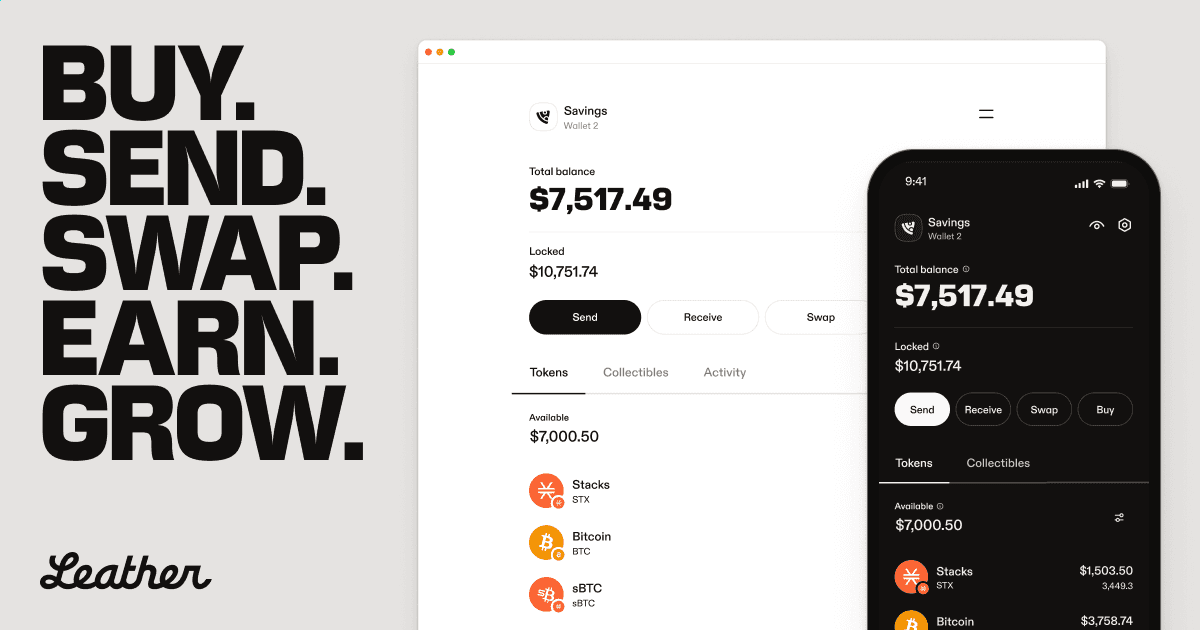
Leather wallet is a self-custodial Bitcoin and Stacks wallet that combines BTC and STX accounts with decentralized swaps, sBTC Bridge access, Ordinals support, BRC-20 asset management, and Ledger signing in one organized app. It is built for people who want direct control of keys while using Bitcoin ecosystem apps, marketplaces, DeFi routes, and Stacks activity from a browser extension or mobile wallet.
Browser, mobile, and hardware signing in the same Bitcoin stack
The wallet is available as a Chrome browser extension and as a mobile app for iOS and Android, so the same account model fits desktop Web3 sessions and everyday phone use. The extension connects to Bitcoin and Stacks apps from the browser, while mobile keeps balances, transfers, swaps, and wallet organization close at hand.
Ledger support gives the setup a separate signing path for users who prefer hardware-key custody. A Ledger device signs transactions while the app presents accounts, prompts, and asset details in a cleaner interface. Leather wallet also keeps multiple Bitcoin and Stacks accounts arranged in one place, which matters once a user has separate addresses for BTC, STX, collectibles, bridge activity, or testing.
How swaps move through Bitflow, Velar, and ALEX
Swapping inside the app routes through established Bitcoin and Stacks ecosystem liquidity providers rather than a centralized account system. The official interface highlights Bitflow, Velar, and ALEX as swap routes, with support for more than 100 tokens. The user reviews the asset pair, route, and signing request, then approves the transaction from the wallet.
This workflow keeps the keys with the holder throughout the swap. Network fees and protocol routing still affect the final amount, so the quoted output, transaction fee, and target asset deserve attention before signing. Leather wallet is most useful here because it brings the quote, signing prompt, and token balances into the same flow instead of forcing a user to jump between a portfolio screen and a separate connector.
sBTC Bridge access for Bitcoin-backed Stacks activity
sBTC is designed to bring Bitcoin liquidity into Stacks applications while preserving a Bitcoin-backed asset model. Through sBTC Bridge access, the wallet gives users a direct path into that part of the ecosystem from the same account environment they already use for BTC and STX. The practical value is simpler movement between holding Bitcoin and using Bitcoin-linked liquidity in apps.
Bridge actions require extra care because they involve more than a plain wallet-to-wallet transfer. A user signs a specific operation, waits for the relevant chain activity, and then sees the bridged position reflected in the destination context. Leather wallet helps by keeping the connected accounts and signing prompts visible, but the user still needs to read the transaction request before approving irreversible movement.
Ordinals, BRC-20s, BTC, and STX in one portfolio
Bitcoin wallets now handle more than simple coin transfers. Ordinals, BRC-20 tokens, BTC balances, STX positions, and app-connected assets create a portfolio that spans different address types and user expectations. The wallet's role is to display those assets clearly and make the right account available when an app asks for a signature.
Leather wallet supports BTC and STX alongside Ordinals and BRC-20s, which makes it relevant for collectors, Stacks users, and Bitcoin DeFi participants who want a single interface rather than a separate wallet for each asset class. It also lets users send and receive tokens and collectibles, so ownership, transfer, and app interaction sit in a shared workflow.
Ledger support for BTC and STX without a messy account list
Hardware wallets protect keys by moving signing to a dedicated device, yet the software interface still determines how understandable the transaction feels. Leather's Ledger experience focuses on smart signing, multi-chain BTC and STX use, and smooth connection after the wallet is paired. That matters when a signature request includes unfamiliar contract data or when several accounts share similar labels.
Custom wallet names reduce mistakes in daily use. A user can label accounts by purpose, such as long-term BTC, Stacks apps, Ordinals collecting, or mobile spending, then choose the right account before connecting to a marketplace or swap route. Leather wallet becomes less of a single balance screen and more of an account manager for a growing Bitcoin ecosystem setup.
Starting from a new or restored wallet
Setup begins by creating a new wallet or restoring an existing one. A new setup generates recovery credentials that must be stored privately, while restoration brings prior accounts back into the app. From there, users add the browser extension or mobile app, choose the accounts they want active, and connect to apps only when a transaction or portfolio action requires it.
A simple first session looks like this:
- Install the Chrome extension or mobile app from the platform chooser.
- Create or restore the wallet and secure the recovery phrase offline.
- Name the main BTC and STX accounts so they are easy to recognize.
- Receive a small test transfer before moving larger balances.
- Connect to a swap, marketplace, or sBTC Bridge flow only when ready to sign.
The official site warns about an active email phishing scam and states that Leather will never send users an email. Treat wallet emails and surprise links as hostile, especially when they pressure you to enter recovery words or approve a transaction.
Where earning and Stacking fit into the wallet
Stacks brings Bitcoin-adjacent smart contract activity into reach, and STX holders use Stacking to participate in the network's reward mechanics. The Leather interface includes Stacking and portfolio areas, giving users a way to view and manage that side of their holdings without separating it from the BTC wallet experience.
The site also references earning and growth features, including yield ranges shown for certain experiences. The important distinction is operational: the wallet is the interface for connecting, signing, and monitoring positions, while the underlying protocol or app defines the reward mechanics. Leather wallet gives access and visibility; the economics come from the specific Stacks, DeFi, bridge, or partner route being used.

When another wallet setup makes more sense
Some users want a pure Bitcoin cold-storage arrangement with no browser connections, no swaps, and no app signing. Others live mostly in Ethereum, Solana, or Cosmos and need their primary wallet to match those networks first. In those cases, a narrower Bitcoin hardware setup or a chain-specific wallet for another ecosystem fits the daily workflow better.
In most cases, Leather wallet is strongest when the user actively works across Bitcoin and Stacks: BTC transfers, STX activity, Ordinals, BRC-20s, decentralized swaps, sBTC Bridge movement, and Ledger-backed signatures. It answers a particular need in the market: a self-custodial wallet built around Bitcoin ecosystem growth rather than a generic multi-chain dashboard trying to cover every network equally.
The main advantages for Bitcoin ecosystem users
The strongest benefit is concentration. A user can buy through trusted partners, send BTC or STX, connect to Web3 apps, trade through decentralized routes, organize multiple wallets, and use Ledger signing without changing identity tools every time. That continuity reduces friction when moving between a portfolio check, a swap, a bridge action, and a marketplace signature.
Open-source positioning also matters for users who value inspectable software and transparent wallet behavior. Self-custody means the user controls keys and approves each transaction, while the app provides the interface for seeing assets and interacting with external protocols. Used carefully, Leather wallet turns Bitcoin and Stacks activity into a clearer daily workflow rather than a scattered set of tabs, addresses, and devices.
Leather wallet: questions and answers
Does Leather support both BTC and STX addresses?
Yes. Leather is built for Bitcoin and Stacks, so it supports BTC and STX accounts in the same wallet environment. That setup is useful when a user holds Bitcoin, interacts with Stacks apps, receives STX, or moves between BTC-focused and STX-focused workflows. It also supports related Bitcoin ecosystem assets such as Ordinals and BRC-20s.
Which devices work with the Leather wallet app?
Leather is available as a Chrome browser extension and as a mobile wallet for iOS and Android. The browser extension is best for connecting to Web3 apps from a desktop browser, while the mobile apps suit everyday portfolio checks, transfers, and wallet management. Ledger support is available for users who want hardware-device signing for compatible Bitcoin and Stacks activity.
Can I swap tokens directly inside Leather?
Yes. The wallet includes decentralized swap access and the official site references routes through Bitflow, Velar, ALEX, and sBTC Bridge. Users review the quoted route and sign the transaction from their wallet. The final cost depends on the selected route, asset pair, network conditions, and protocol fees shown before approval.
Recovering access if my phone or computer is lost
Access is restored with the wallet recovery phrase created during setup. The replacement device does not contain the funds by itself; the recovery phrase recreates control of the accounts. Anyone with that phrase controls the wallet, so it belongs offline in a private place and should never be typed into forms, emails, support chats, or random websites.