Leather wallet security is a self-custody signing layer for Bitcoin and Stacks accounts
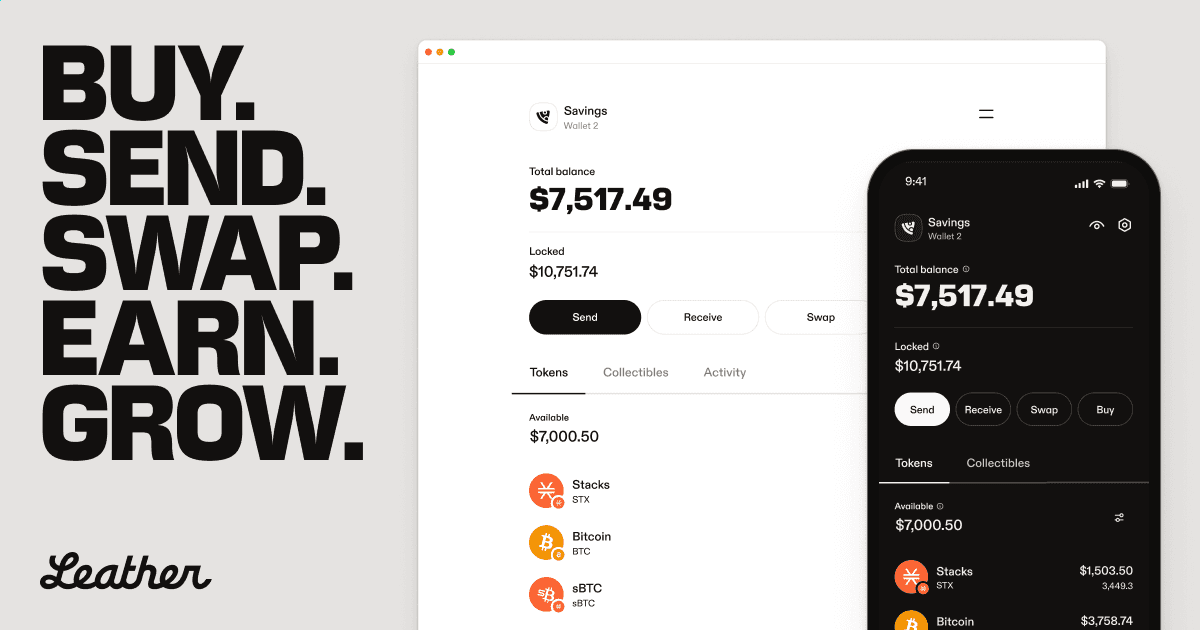
Leather wallet security is a protection model built around self-custody, clear transaction review, and Ledger-backed signing for BTC and STX. The wallet keeps users in control of Bitcoin, Stacks assets, Ordinals, BRC-20s, and sBTC activity while connecting to apps, swaps, DeFi tools, and marketplaces. Its main security value comes from keeping accounts organized, separating signing from browsing, and making each approval visible before assets move.
This topic matters because a Bitcoin ecosystem wallet now handles more than simple BTC transfers. A single account might receive Ordinals inscriptions, hold STX, bridge into sBTC, swap tokens through Bitflow, Velar, or ALEX, and connect to browser-based apps. When those actions share one wallet surface, security depends on how clearly the wallet presents addresses, networks, signatures, and permissions.
Ledger signing across BTC and STX
The distinctive security feature is Leather's Ledger support for both Bitcoin and Stacks. A hardware wallet keeps private keys isolated from the browser or phone, while Leather acts as the interface that prepares transactions and requests approval. That split matters: the app displays the action, and the Ledger confirms the signature path before the transaction leaves the user's control.
Leather wallet security is especially relevant for people who hold BTC and STX together. Without clean account organization, users confuse addresses, sign with the wrong account, or approve a Stacks action while thinking only about Bitcoin. Leather's multi-chain BTC and STX flow keeps those accounts in one place while still requiring deliberate confirmation for signing.
What the wallet protects during app sessions
Connecting a wallet to a Web3 app does not transfer assets by itself. The risk appears when the connected app asks for a signature, token approval, swap confirmation, or transfer. Leather wallet security focuses on that moment of intent: the user needs to see which account is signing, which asset is involved, and what destination or contract receives the instruction.
The browser extension connects directly to apps, while the mobile wallet gives access on iOS and Android. Both surfaces serve the same basic purpose: keep the recovery phrase and accounts under the user's control, then expose only the signing action needed for a transaction. This design is important in Bitcoin DeFi because BTC, STX, sBTC, Ordinals, and token swaps each use different transaction patterns.
Organized wallets reduce signing mistakes
Account labeling sounds like a convenience feature, but it has real security value. Leather lets users name wallets and keep Bitcoin and Stacks accounts organized, which reduces the chance of sending from the wrong account or treating a high-value vault like a daily spending wallet. Clear names also make Ledger workflows less error-prone because the user recognizes the account before approving a signature.
A sensible setup separates everyday activity from long-term storage. One wallet handles app connections and smaller swaps; another holds Ordinals, BRC-20s, or larger BTC balances with stricter Ledger use. Leather wallet security improves when the account structure matches how assets are actually used, rather than forcing every action through the same address.
Phishing is the security risk users meet first
The most direct warning around Leather concerns email phishing that pretends to involve two-factor authentication. Wallet recovery does not start from an email prompt, and a seed phrase should never be typed into a form reached from an inbox message. Treat email requests about wallet access as hostile, because the real wallet flow happens inside the installed extension or mobile app.
Phishing succeeds by rushing a user into approving something that looks routine. The safer rhythm is slower: open the wallet from the known app, inspect the account name, read the asset and network, and confirm the exact action on the Ledger when hardware signing is used. This is where Leather wallet security depends on user attention as much as product design.
Secure swaps, sBTC, and token activity
Day to day, Leather supports Bitcoin ecosystem activity beyond holding BTC. Users interact with decentralized swaps for more than 100 tokens and reach services such as Bitflow, Velar, ALEX, and the sBTC Bridge from a wallet context. Security during those actions depends on knowing whether the transaction is a swap, a bridge operation, a token transfer, or a contract interaction.
Swap pages show rates and routes, but the wallet confirmation is the final checkpoint. Before signing, the user should recognize the asset ticker, account, destination, and expected network fee. With BRC-20s and Ordinals, extra care belongs on asset identity and receiving address format, because collectibles and token inscriptions are harder to reverse once sent to the wrong place.
- Use Ledger for accounts holding larger BTC or STX balances.
- Name wallets by purpose, such as daily, vault, Ordinals, or testing.
- Keep app connections limited to services you actively use.
- Review every swap or bridge transaction as a fresh action.
- Store the recovery phrase offline and away from screenshots or cloud notes.
Getting started with a security-first setup
A new user should install the wallet on the platform they actually use: Chrome for browser app connections, iOS or Android for mobile access. Create or restore the wallet, then write down the recovery phrase in the standard order shown during setup. That phrase is the root of access, so the wallet's security depends on keeping it private and physically protected.
After setup, add names to accounts before making large transfers. Send a small BTC or STX test transaction first, confirm the receiving address, and then move meaningful balances. For Ledger users, connect the device early and practice a low-value transfer so the approval screens are familiar before higher-value activity begins.
Open-source design and self-custody tradeoffs
Open-source wallet software gives developers and security researchers a way to inspect how the interface handles accounts, signatures, and network interactions. That transparency strengthens trust, but self-custody still places recovery and approval decisions with the wallet owner. Leather wallet security works best when the user treats the wallet as a signing tool, not just an asset dashboard.
The benefit is direct control across Bitcoin and Stacks apps without handing custody to an exchange account. The responsibility is equally direct: misplaced seed phrases, rushed approvals, and fake support messages remain dangerous. A hardware wallet, named accounts, and conservative app connections form the strongest everyday pattern for BTC, STX, Ordinals, BRC-20s, and sBTC.

Where alternatives fit into a safer Bitcoin stack
Some users keep exchange wallets for quick buys, a mobile wallet for small transfers, and a hardware wallet for long-term holdings. Leather fits the Bitcoin and Stacks application layer, where browser connections, swaps, Ordinals, and Ledger signing need to work together. A dedicated Ledger app alone is excellent for cold storage, while Leather adds the app-facing interface for Bitcoin ecosystem activity.
That distinction helps users choose the right tool for each balance. Larger reserves belong behind hardware signing. Smaller balances suit mobile payments and app testing. Ordinals and BRC-20s benefit from wallet organization because asset handling differs from ordinary BTC. Leather wallet security gives those workflows one coherent place without requiring the user to abandon self-custody.
Leather wallet security: questions and answers
Does Leather require a Ledger to secure BTC and STX?
Leather does not require a Ledger, but Ledger signing adds a stronger layer for BTC and STX accounts because private keys stay on the hardware device. The wallet still works as a self-custodial browser or mobile wallet without one. Users holding larger balances, Ordinals, or long-term STX positions get the clearest benefit from hardware confirmation before each transaction is signed.
Is Leather safer as a browser extension or mobile wallet?
The safer choice is the one that matches the activity. The browser extension is better for connecting to Bitcoin and Stacks apps from Chrome, while mobile suits smaller transfers and on-the-go account checks. For larger BTC or STX balances, pair either surface with Ledger signing and keep the recovery phrase offline. Device hygiene matters as much as the platform.
Which assets should stay in a separate Leather account?
Separate accounts make sense for high-value BTC, STX used for Stacking, Ordinals, BRC-20s, and experimental app activity. Naming each account by purpose lowers the chance of signing from the wrong wallet. A small app-testing account also limits exposure when trying new swaps, bridges, or marketplaces in the Bitcoin ecosystem.
Can I use Leather safely for Ordinals and BRC-20 assets?
Yes, Leather supports Bitcoin ecosystem assets such as Ordinals and BRC-20s, and the safest workflow is to keep those accounts clearly named and separate from daily spending. Check the receiving address, asset identity, and transaction details before signing. These assets are easy to mishandle because they are tied to Bitcoin transaction structure rather than a simple account balance display.