Leather wallet is a self-custodial Bitcoin and Stacks wallet for earning yield across apps
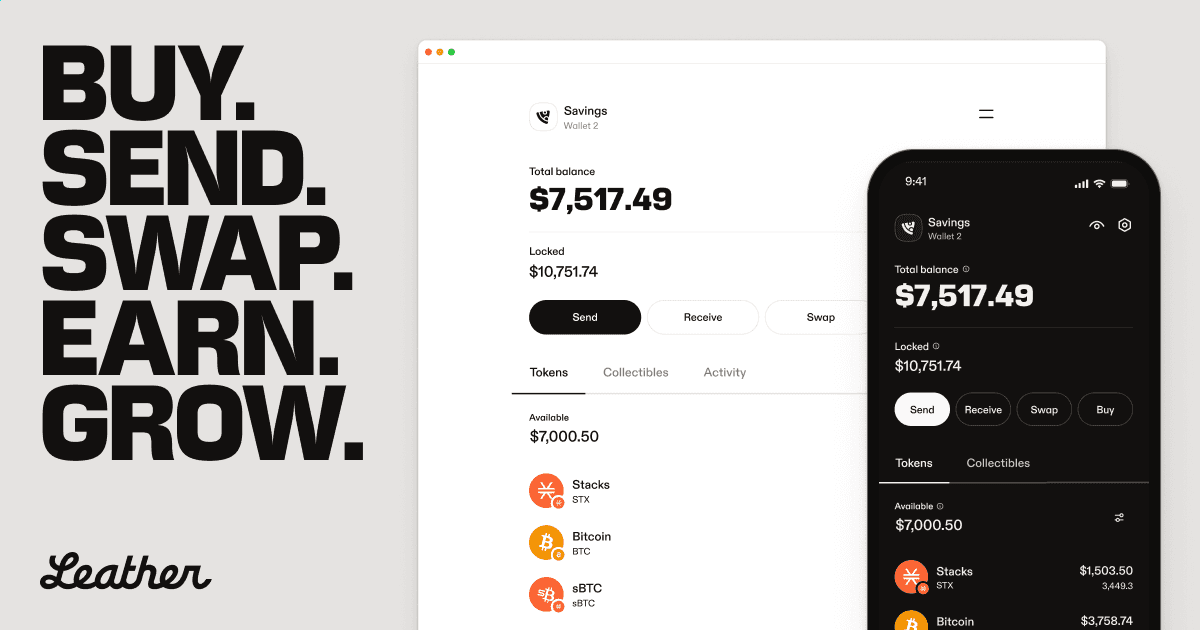
Leather wallet is a self-custodial wallet for the Bitcoin ecosystem, built to hold BTC, STX, Ordinals, BRC-20s, and app-connected assets while keeping the user in control of signing. It works across a browser extension and mobile apps, connects to Bitcoin and Stacks applications, supports Ledger hardware wallets, and gives users a single place to buy, send, swap, stack, bridge, and manage activity tied to Bitcoin-native finance.
Bitcoin and Stacks accounts in one signing layer
The main value is practical: it brings Bitcoin assets and Stacks activity into the same wallet experience. BTC remains the base asset, while STX powers Stacks transactions and smart-contract interactions. That pairing matters because many Bitcoin apps rely on Stacks for programmable functions such as swaps, Stacking, sBTC movement, token markets, and NFT-style collectibles.
It also treats signing as the core action. A wallet address is more than a place to receive coins; it is the key used to approve transfers, connect to marketplaces, claim collectibles, swap tokens, and interact with DeFi contracts. Leather wallet gives those approvals a clearer surface, including transaction prompts and organized accounts across Bitcoin and Stacks.
Where BTC, STX, Ordinals, and BRC-20s fit
Bitcoin users increasingly hold more than plain BTC. Ordinals attach data to individual satoshis, BRC-20 tokens use inscription-based conventions, and Stacks assets live on a smart-contract layer connected to Bitcoin. Leather wallet supports these asset types from the same portfolio view, so a user sees spendable coins, tokens, and collectibles without jumping between unrelated tools.
This matters most when a user moves between marketplaces and apps. A collector checking an Ordinal, a trader swapping a Stacks token, and a BTC holder receiving funds all need different transaction formats, but they still expect one coherent wallet. The interface reduces that operational friction while leaving approvals in the user's hands.
How swaps and app connections work
When the wallet connects to a Web3 app, the app requests permission to view public addresses and submit transactions for approval. The user reviews the request, confirms the account, and signs only the actions they accept. On Stacks, that includes contract calls for swaps through app routes such as Bitflow, Velar, ALEX, and sBTC Bridge integrations shown in the product experience.
Swapping over app-connected liquidity is different from a centralized exchange trade. The wallet does not take custody as an exchange account; it provides the keys and signing flow needed to interact with decentralized protocols. Network fees, token liquidity, and contract execution determine the final transaction details before confirmation.
Stacking, sBTC, and yield inside the Bitcoin ecosystem
Stacks introduced a yield path called Stacking, where STX holders lock tokens to support network consensus and receive BTC rewards according to protocol rules. sBTC adds another Bitcoin-linked asset path for apps that need programmable Bitcoin liquidity. Leather wallet surfaces these opportunities as wallet-connected actions rather than as a separate custodial account.
The distinction is important. Yield comes from the protocol or application route being used, not from idle coins simply sitting in the wallet. Users still sign transactions, choose where assets move, and account for lockups, fees, and timing. A quoted rate reflects the app or protocol conditions at that moment, and the confirmed transaction defines the actual commitment.
Ledger support for colder key storage
Hardware-wallet support is one of the stronger reasons to use this wallet for larger balances. Ledger devices keep private keys on the hardware device while the browser extension or mobile interface presents accounts, balances, and transaction details. The user confirms sensitive actions on the device, adding a physical approval step before funds move.
Leather wallet emphasizes multi-chain BTC and STX handling with Ledger, which is useful for people who hold both assets and still want one organized signing workflow. The benefit is not just storage; it is fewer mismatched accounts, fewer confusing address switches, and cleaner prompts when moving between Bitcoin payments and Stacks contract activity.
A first setup that avoids account confusion
New users start by choosing the platform: Chrome browser extension, iOS, or Android. From there, they create a new wallet or restore an existing one with a recovery phrase. Account names help separate long-term holdings, marketplace activity, testing wallets, and Ledger-connected addresses, which becomes important once a person uses more than one Bitcoin or Stacks app.
- Install the extension or mobile app from the expected platform store.
- Create or restore the wallet and store the recovery phrase offline.
- Add account names that match how each account will be used.
- Connect Ledger before moving high-value BTC or STX.
- Send a small test transaction before transferring a larger balance.
That small setup discipline prevents most everyday mistakes. A Leather wallet setup with named accounts gives the user a clearer map of which address is used for savings, which one signs apps, and which one holds collectibles.
Fees, swaps, and the cost of moving assets
Costs come from the networks and routes involved. Bitcoin transactions pay BTC miner fees. Stacks transactions pay STX fees. Swaps also reflect liquidity, price impact, and the route selected by the connected app. When bridging or using sBTC-related flows, the total cost includes the transactions needed to enter and exit that route.
The wallet interface helps expose the action before it is signed, but the user should read the asset, destination, and fee line carefully on every approval. One specific caution: phishing messages that pressure users into clicking wallet links are a real risk, and the official product warning states that Leather does not send email links for 2FA.

When another wallet or exchange makes more sense
In most cases, Leather wallet belongs to the Bitcoin and Stacks side of crypto. A user whose main activity is Ethereum DeFi, Solana trading, or a broad centralized exchange portfolio needs a different primary tool for those ecosystems. MetaMask remains the common choice for EVM chains, Phantom is deeply associated with Solana, and Coinbase or Kraken accounts suit users who mainly buy through a custodial exchange.
The choice is about workflow. This wallet is strongest when BTC, STX, Ordinals, BRC-20s, Stacking, sBTC, and Bitcoin app connections are central to the user's activity. It is less efficient as a general-purpose wallet for chains it does not focus on, because the best wallet is the one that understands the accounts, fees, signatures, and asset standards the user actually touches.
Why self-custody changes the ownership model
Self-custody means the recovery phrase controls access. The wallet software displays balances and prepares transactions, but the keys authorize movement. That model gives users direct control over transfers to apps, marketplaces, and personal addresses, while also making recovery phrase storage a serious responsibility.
For context, Leather wallet makes that model approachable by combining portfolio views, app connections, swaps, mobile access, and hardware-wallet support. It serves the user who wants Bitcoin exposure to mean more than holding coins on an exchange: receiving BTC, managing STX, collecting inscriptions, signing Stacks transactions, and participating in Bitcoin-linked applications from one focused interface.
Leather wallet: questions and answers
What fees do users pay when using Leather wallet?
Users pay the network fees required by the action they sign. Bitcoin transfers use BTC miner fees, while Stacks transactions use STX fees. Swaps add route-specific costs such as price impact and liquidity spread through the connected app. The wallet itself prepares and displays the transaction request, but the final cost comes from the network and protocol path being used.
Does Leather wallet work with Ledger hardware wallets?
Yes. Leather wallet supports Ledger for BTC and STX workflows, letting users view accounts and prepare transactions through the wallet interface while confirming sensitive actions on the Ledger device. This setup keeps private keys on the hardware wallet and gives users a cleaner way to manage Bitcoin and Stacks accounts without relying only on a browser or phone key store.
Can I use Leather wallet for Ordinals and BRC-20 tokens?
Yes. The wallet supports Bitcoin-native assets beyond ordinary BTC balances, including Ordinals and BRC-20s. That makes it useful for users who move between Bitcoin collectibles, inscription-based tokens, and Stacks apps. As with any Bitcoin asset transaction, users should check the receiving address, selected account, and fee before signing because asset-specific transfers are harder to unwind after broadcast.
Which platforms support Leather wallet?
The product is available as a Chrome browser extension and as mobile apps for iOS and Android. The extension is the natural choice for connecting to desktop Web3 apps, while mobile suits everyday portfolio checks and transfers. Users who depend on app signing should choose the platform that matches the applications they use most frequently.
Do I need STX to use Stacks apps through the wallet?
Yes, Stacks transactions require STX for fees. A user holding only BTC can receive and send Bitcoin, but contract interactions on Stacks, including many swaps and app actions, need STX in the relevant account. Keeping a small STX balance for transaction fees prevents failed or delayed actions when using Stacks-based protocols.
What happens if I lose my recovery phrase?
The recovery phrase is the backup for wallet access. If the device is lost, damaged, or replaced, the phrase restores the accounts tied to it. If both device access and the recovery phrase are gone, the wallet cannot reconstruct the private keys. Users should store the phrase offline in a durable place before moving meaningful BTC, STX, or collectibles into the wallet.