Leather wallet is a self-custodial Bitcoin and Stacks wallet for BTC, STX, Ordinals, and Bitcoin-native apps
Leather wallet is a self-custodial wallet for the Bitcoin ecosystem, built to hold BTC, manage STX, collect Ordinals, handle BRC-20 tokens, and connect to apps on Bitcoin and Stacks. It gives the user direct control of accounts through a browser extension and mobile apps while adding practical tools for swaps, sBTC, Stacking, Ledger signing, and marketplace activity.
A Bitcoin-first account layer for BTC, STX, and collectibles
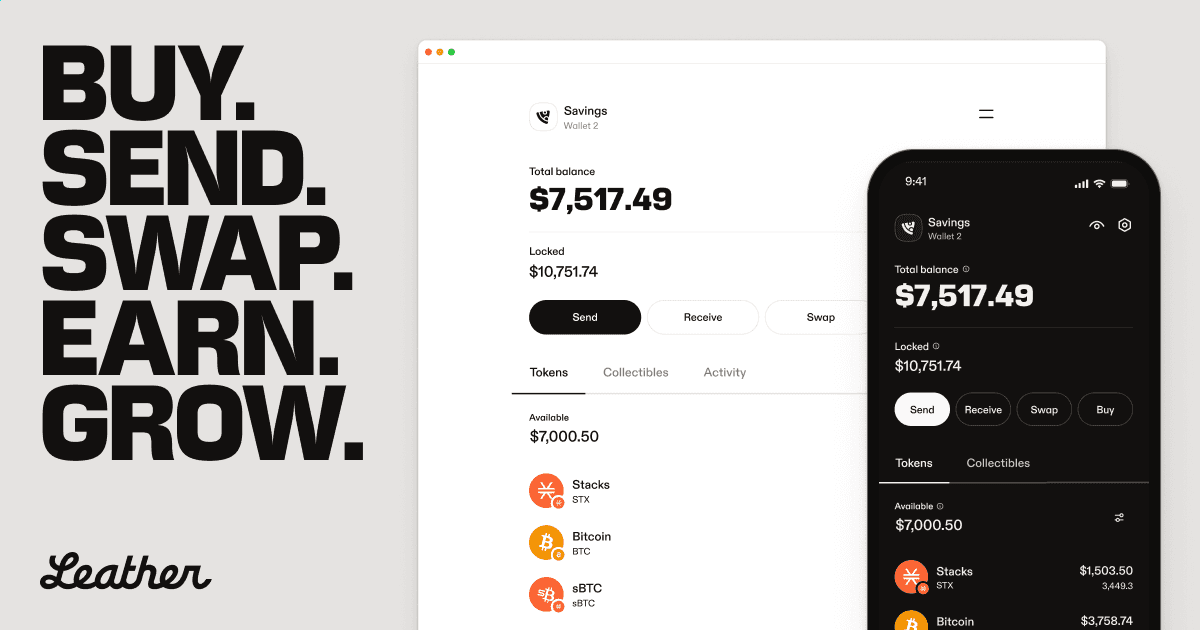
The core idea is simple: one account interface should cover the assets people actually use around Bitcoin. That includes native BTC, STX on the Stacks network, Ordinal inscriptions, BRC-20 tokens, and app positions tied to Bitcoin DeFi. Leather wallet brings those balances into a single portfolio view so a user does not need separate tools for sending coins, checking collectibles, and authorizing app interactions.
Because it is self-custodial, the private keys belong to the wallet holder. Creating or restoring an account gives access to Bitcoin and Stacks addresses, and signing happens from the wallet interface before a transaction reaches the network. That model matters most when using Web3 apps, marketplaces, bridges, and swaps, where a rushed signature creates real consequences.
Browser extension and mobile access serve different routines
The Chrome extension is the natural fit for desktop workflows. It connects directly to Bitcoin and Stacks apps from the browser, so approvals, address selection, and signatures happen alongside the site being used. That is the setup a collector wants when minting an Ordinal, listing an inscription, or connecting to an app that expects a wallet prompt.
Mobile support on iOS and Android gives the same account system a daily-use shape. A phone is better for checking a portfolio, receiving funds, naming wallets, and keeping track of balances away from a desktop. Leather wallet treats mobile as a full place to manage assets, not merely a read-only companion.
How signing works when apps request access
App connections start with permission. A site asks the wallet to connect, the user chooses the relevant account, and later actions require transaction approval. The wallet shows the requested operation before signing, which is the point where the holder decides whether the destination, asset, and network action match the intended move.
Stacks activity uses STX for network fees, while Bitcoin transactions use BTC miner fees. Those costs are separate from the wallet interface itself and change with network demand. Swaps, bridge actions, and marketplace trades also include routing or protocol-level costs set by the app being used, so the total transaction screen deserves attention before approval.
Swapping, sBTC, and Stacking inside the Bitcoin ecosystem
Beyond storage, Leather wallet supports actions that make Bitcoin ecosystem assets usable. The official interface highlights decentralized swaps for more than 100 tokens through partners and apps such as Bitflow, Velar, ALEX, and the sBTC Bridge. The wallet is the signing layer: it holds the account, displays the request, and sends the approved transaction to the connected service.
sBTC is especially relevant because it brings Bitcoin liquidity into Stacks-based applications. A user who works with sBTC needs a wallet that understands both sides of the experience: BTC as the base asset and Stacks apps as the execution environment. Stacking is another Stacks-specific use case, where STX holders participate in the network's reward mechanism through supported flows.
Ordinals and BRC-20s need wallet clarity
Ordinals changed what many people expect from a Bitcoin wallet. Inscriptions are tied to individual satoshis, and careless transfers create a risk of sending a collectible away as part of an ordinary BTC transaction. A wallet designed for this niche must make collectibles visible and give users enough context to separate routine payments from inscription management.
Leather wallet addresses that need by treating collectibles and tokens as part of the main Bitcoin asset experience. Users can view, receive, and manage Ordinals and BRC-20s alongside coins rather than relying on a general-purpose wallet that treats every Bitcoin output as interchangeable. That clarity becomes important when moving between marketplaces, mint pages, and long-term storage.
Ledger support for people who want hardware signing
Hardware wallets remain popular among users who want private keys kept on a dedicated signing device. Leather wallet includes Ledger support for Bitcoin and Stacks accounts, letting the extension or app organize activity while the Ledger device confirms sensitive signatures. The software interface handles discovery, display, and connection; the hardware wallet handles key isolation.
This split is useful for larger balances, long-held Ordinals, and accounts that interact with DeFi only occasionally. It also reduces the pressure to choose between convenience and stronger key handling. A user can browse apps, prepare transactions, and review the request on screen, then confirm the signature through the connected Ledger flow.
Setting up a wallet without losing the recovery path
A new user starts by choosing the platform: Chrome extension, iOS, or Android. From there, the setup flow creates a new wallet or restores an existing one. Naming wallets helps distinguish a main BTC account, an STX account, a collectibles account, and a hardware-backed account, especially when several addresses appear in the same portfolio.
The essential setup habits are practical and few:
- Store the recovery phrase offline in a place that survives device loss.
- Use separate accounts for everyday app activity and long-term holdings.
- Read transaction prompts before signing swaps, listings, bridge actions, or transfers.
- Keep the browser extension and mobile app updated through the platform's normal store.
- Treat unexpected email prompts as phishing attempts, especially messages asking for wallet access.

Where this fits beside exchanges and general crypto wallets
An exchange account is convenient for buying and selling, but a self-custodial wallet is the better fit once the goal becomes using Bitcoin ecosystem apps directly. Leather wallet focuses on that active ownership layer: sending BTC, using STX, connecting to Stacks applications, managing inscriptions, and authorizing Bitcoin-adjacent DeFi actions without handing account control to a trading venue.
General multi-chain wallets cover broad token lists across networks such as Ethereum, Solana, and Polygon. They make sense for users who prioritize breadth. This wallet is narrower and more specialized: it is built around Bitcoin, Stacks, sBTC, Ordinals, BRC-20s, and the apps that rely on those assets. That focus is the reason it feels relevant to people who live mainly in the Bitcoin ecosystem.
Security expectations for daily use
Self-custody puts meaningful power in the user's hands, so the safety model is behavior-driven as much as software-driven. The wallet can organize accounts, surface approvals, and integrate hardware signing, while the holder still controls which sites connect and which transactions receive a signature. The most important defense is refusing prompts that do not match the action being taken.
In most cases, Leather wallet is open-source, which gives developers and security -minded users a way to inspect how the software is built. The project also warns about phishing emails that pretend to involve wallet security or 2FA. Since a wallet account is controlled through keys and signatures, any message pushing a link or seed phrase entry should be treated as hostile.
Questions people ask about Leather wallet
Does Leather wallet charge a fee to hold BTC or STX?
Holding assets in Leather wallet does not create a storage fee. Sending BTC requires a Bitcoin network fee, and Stacks transactions require STX for gas. Swaps, bridge actions, or marketplace trades include the costs shown by the connected app or protocol. The wallet's role is to display and sign the transaction, while the network and app determine the final cost.
Which assets belong in a Leather wallet portfolio view?
A portfolio can include BTC, STX, Ordinals, BRC-20 tokens, and assets connected to Bitcoin and Stacks apps. It is built around the Bitcoin ecosystem rather than every chain on the market. That makes it especially relevant for users who collect inscriptions, use Stacks DeFi, bridge into sBTC, or move between Bitcoin-native marketplaces and apps.
Is Leather wallet better for Ordinals than a regular Bitcoin wallet?
It is better suited to Ordinals than a basic Bitcoin wallet because it recognizes collectibles and BRC-20 activity as part of the interface. A basic wallet that only focuses on BTC payments gives less context around inscriptions. Collectors benefit from seeing which assets they hold before approving transfers, listings, or marketplace actions.
Can Leather wallet buy crypto directly?
Leather wallet includes buy flows through trusted partners, so users can purchase supported assets from inside the wallet experience rather than starting at an exchange first. The payment method, region support, identity checks, and final quote come from the selected provider. After purchase, assets arrive in the wallet account controlled by the user's keys.